
Finding the best shampoo for hair fall can feel like a guessing game. Every bottle promises thicker, stronger hair, yet the strands in your brush and shower drain tell a different story. The truth is that no shampoo works well until you understand why your hair is falling and what kind of hair you are treating. Cause and hair type decide which formula will actually help.
That is exactly what this guide covers. You will learn why hair fall happens, what hair porosity is and how to test it at home, and what to look for in a hair fall shampoo. If you want to see a gentle, sulphate free option built for this concern, explore Mintree's Hair fall shampoo, designed to reduce hair fall, promote hair growth and give hair a fuller look.
Why Does Hair Fall Happen?
Losing some hair every day is completely normal. Most people shed roughly 50 to 100 strands daily as old hairs make way for new ones. Hair fall becomes a concern when you notice more hair than usual on your pillow, comb or shower floor, a widening parting, or a visibly thinner ponytail.
Hair fall rarely has a single cause. It is usually a mix of internal and external factors, and identifying yours is the first step towards fixing it.
Stress and Lifestyle
Physical or emotional stress can push a large number of hair follicles into their resting phase at the same time. The result is heavy shedding that often shows up two to three months after the stressful event. Poor sleep, crash diets, long working hours and a sedentary routine can make it worse.
Nutritional Gaps
Hair is built from protein and depends on a steady supply of nutrients. Low protein intake, and low levels of iron, vitamin D or B vitamins, are commonly linked with weak, thinning hair. A balanced diet with enough protein, leafy greens, nuts, seeds, fruit and pulses supports healthy growth from within.
Hormonal Changes
Pregnancy, childbirth, menopause, thyroid problems and conditions such as PCOS can all affect the hair growth cycle. Many women notice increased shedding a few months after delivery, and many men and women see
gradual thinning as hormone levels change with age. During these phases, a gentle routine from a brand like Mintree can help keep the scalp comfortable and hair looking its best.
Genetics
Pattern hair loss runs in families. If your parents or grandparents experienced thinning, you may be more likely to as well. Genetic hair loss is gradual and usually needs advice from a doctor or dermatologist, though a gentle routine can help keep the hair you have in good condition.
Scalp Problems
A healthy scalp is the foundation of healthy hair. Dandruff, excess oil, product build-up and scalp irritation can leave follicles clogged and hair weaker at the root. If the scalp is itchy, flaky or inflamed, the hair growing from it will rarely be at its best.
Harsh Products and Heat Styling
Strong detergents, frequent colouring, bleaching, straightening and blow-drying all weaken the hair shaft. This does not always cause hair to fall from the root, but it makes strands snap along their length. Tight hairstyles such as high ponytails and buns can also pull on the roots over time.
Illness, Medication and Water Quality
High fever, infections, major surgery and certain medicines can trigger temporary shedding. Hard water, which is common in many Indian cities, can leave mineral deposits on the scalp and hair, making hair feel dry, rough and brittle.
A note on when to see a doctor: if you are losing hair suddenly, in patches, or alongside other symptoms such as fatigue, weight changes or irregular periods, speak to a doctor or dermatologist. Shampoo supports hair health, but it cannot replace medical advice for an underlying condition.
Can the Right Shampoo Really Help with Hair Fall?
It helps to be realistic. A shampoo cannot change your genes, correct a hormonal imbalance or replace missing nutrients. What it can do is create the best possible environment for the hair you have.
A well-chosen hair fall shampoo cleans the scalp without stripping it, keeps follicles free from build-up, and reduces the damage that leads to breakage during washing and combing. It can also leave hair looking fuller and feeling stronger, which makes everyday styling easier. Used consistently alongside good nutrition and gentle habits, the right shampoo is one important piece of a larger routine.
What to Look for in a Hair Fall Shampoo
With so many products on the shelf, the label is your best guide. Here is what matters.
- A gentle, sulphate free formula. Harsh sulphates can strip natural oils and leave the scalp dry or irritated. A gentler cleanser keeps the scalp balanced.
- No heavy silicones or mineral oil. These can coat the hair and build up on the scalp over time, weighing hair down and making it look flat.
- Paraben free. Many people prefer to avoid parabens in products they use regularly.
- Volumising benefits. Hair that looks fuller makes thinning less noticeable, so a volumising formula is a useful bonus.
- Suitability for your hair type. A shampoo should work for both your scalp and your hair texture, which brings us to hair porosity.
- A matching conditioner. Shampoo cleans, while conditioner smooths and protects the lengths so they break less.
What Is Hair Porosity and Why Does It Matter?
Hair porosity describes how easily your hair absorbs and holds on to moisture. Each strand is covered in tiny overlapping scales called the cuticle. When these scales lie flat and tight, moisture struggles to get in. When they are lifted or damaged, moisture gets in quickly but escapes just as fast.
Porosity matters for hair fall because dry, brittle hair breaks easily. Many people who think they have a hair fall problem are actually dealing with breakage caused by poorly moisturised or damaged hair. Knowing your porosity helps you choose products that suit your hair rather than fight against it.
The Three Types of Hair Porosity
Low porosity hair has tightly closed cuticles. Water tends to bead up on the surface, products sit on top of the hair instead of sinking in, and hair can take a long time to get fully wet and to dry. Low porosity hair is prone to product build-up, so lightweight formulas work best.
Medium porosity hair has a balanced cuticle that absorbs moisture well and holds it. It generally holds styles, shines naturally and is the easiest to manage.
High porosity hair has a raised or damaged cuticle with gaps that let moisture in and out quickly. Hair often feels dry, rough and frizzy, tangles easily and dries very fast. High porosity can be natural, but it is often caused by colouring, bleaching, heat styling and environmental exposure.
How to Find Your Hair Porosity at Home
You do not need a salon visit to get a good idea of your hair porosity. Try these simple tests, and use more than one for a more reliable answer.
- The Float Test
Take a few clean strands of hair that have shed naturally. Make sure they are free of products. Drop them into a glass of room temperature water and wait two to four minutes.
- Hair that floats on top suggests low porosity.
- Hair that sinks slowly to the middle suggests medium porosity.
- Hair that sinks quickly to the bottom suggests high porosity.
Keep in mind that this test is not perfectly accurate, because oils and residue on the strand can affect the result.
- The Spray Bottle Test
Spray a small section of clean, dry hair with water and watch what happens.
- If the water beads up and sits on the surface, your hair is likely low porosity.
- If the water soaks in after a short while, your hair is likely medium porosity.
- If the hair absorbs the water almost instantly, it is likely high porosity.
- The Slip and Slide Test
Take a single strand of clean hair and hold it between two fingers. Slide your fingers upwards from the tip towards the scalp.
- A smooth strand with little resistance suggests low porosity, because the cuticle is flat.
- A strand with slight bumps suggests medium porosity.
- A very rough, bumpy strand suggests high porosity, because the cuticle is lifted or damaged.
- Watch Your Drying Time
Observe how your hair behaves after a wash. Hair that takes a very long time to dry usually points to low porosity. Hair that dries quickly and feels dry or frizzy soon after usually points to high porosity.
Quick Reference
Hair Care Tips for Each Porosity Type
No matter which type you have, a gentle shampoo without harsh detergents is a safe starting point, and a good conditioner and a sealing serum help protect the hair from breaking.
Mintree Hair Fall Stop Shampoo: A Gentle Choice for Hair Fall
If you are looking for a hair fall shampoo that follows the principles above, Mintree's Volumizing Hair Fall Stop shampoo is worth a closer look. It is designed to reduce hair fall, promote hair growth and give hair a voluminous look, and it is made for both men and women.
What Makes It Different
- Sulphate free. The gentle cleansing helps keep your scalp comfortable, instead of stripping it.
- Silicone, mineral oil and paraben free. There is nothing heavy to coat your hair or build up on your scalp.
- Certified organic and vegan. Mintree carries certified organic, certified vegan and certified non-GMO credentials across its range.
- Volumising. The formula gives hair a fuller look, which helps when thinning is a worry.
- For men and women. The same routine works for everyone in the family.
Hero Ingredients Inside the Bottle
What sets this shampoo apart is its formula. Mintree describes it as enriched with 5 ceramides, 5 actives, 14 antioxidants and 16 botanicals, blended with Himalayan glacial water. The key ingredients include:
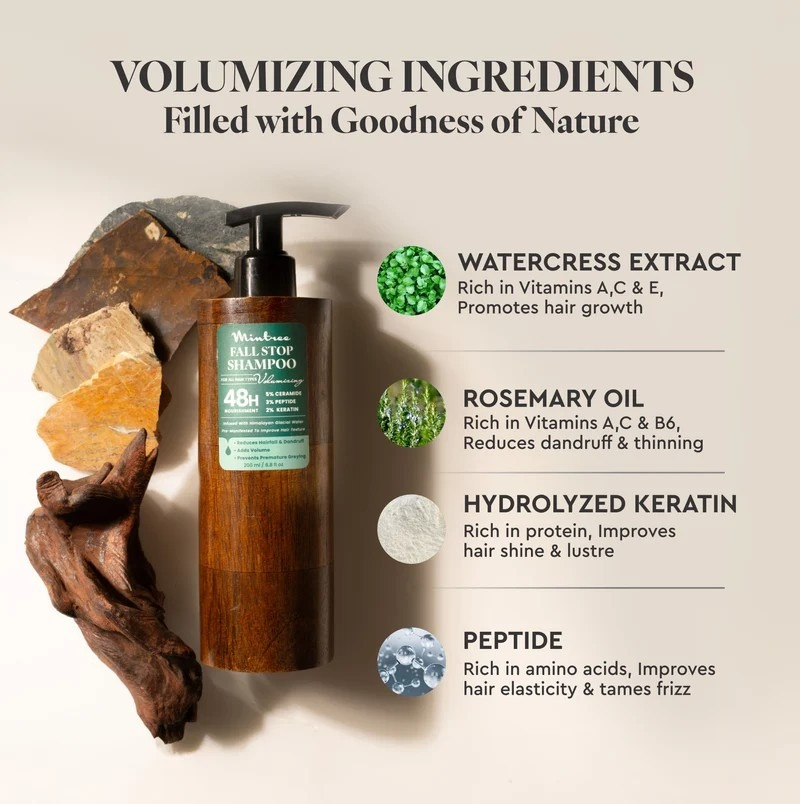
- 5 Ceramides (Ceramide AP, NP, NG, EOP and EOS). Ceramides support the hair's natural barrier.
Mintree's Balancium Ceramide 5 Complex is meant to help lock in moisture without leaving the scalp dry, which is especially useful for dry, high porosity hair.
- Peptide complex. Included to help strengthen hair.
- Hydrolyzed keratin. Keratin is the protein hair is made of, and this form is used to help strengthen strands.
- Watercress extract. One of the shampoo's key actives, used to help promote new hair growth and protect against oxidative stress.
- Camellia leaf oil. Another key active that nourishes the hair.
- Jamaican black castor oil. A well-known hair-care oil that adds nourishment.
- Rosemary oil. A popular ingredient in hair care, used here to nourish the hair and scalp.
- Antioxidants such as hyaluronic acid and nano collagen. Used to help strengthen and nourish hair.
- Botanicals such as bergamot oil and gotu kola extract. Used to help reduce hair fall and thinning.
The formula also includes other plant ingredients such as argan oil, olive oil, aloe vera, green tea, chamomile and nettle leaf, along with vitamin E.
Mintree positions the shampoo for people dealing with hair fall, dandruff, a dry and itchy scalp, and frizzy or damaged hair. As with any hair product, results vary from person to person.
How It Suits Different Hair Porosity Types
Because the shampoo is free from silicone and mineral oil, it does not leave a heavy coating on the hair. That is helpful for low porosity hair, which tends to suffer from build-up. For medium porosity hair, it fits into a simple everyday routine. For high porosity hair, which is dry and fragile, the gentle sulphate free cleansing is kinder than harsh detergents, and it works best when paired with a conditioner to help seal in moisture.
Build a Complete Routine
Shampoo is only the first step. Mintree's hair care range includes:
- Volumizing Hair Fall Stop Conditioner. It nourishes, strengthens, volumises and detangles, and helps with split ends, so strands break less.
- Magic Coat Anti-Humidity Hair Spray. A heat-activated fluid that creates a protective shield around each strand and seals the cuticle for smooth, frizz-free, shiny hair.
Refill packs of the shampoo and conditioner are also available, and shipping is free on all orders.
How to Use a Hair Fall Shampoo the Right Way
Even the best formula needs the right technique. Follow these steps for the best results.
- Wet your hair thoroughly. Use lukewarm water, as very hot water can dry out the scalp.
- Use a small amount. A coin-sized amount is enough for most people. Apply it to the scalp first, not the lengths.
- Massage gently. Use the pads of your fingers, not your nails, and massage in small circles for a minute or two. This lifts away oil and build-up and helps circulation.
- Rinse well. Leftover shampoo can irritate the scalp, so rinse until the water runs clear.
- Condition the lengths. Apply conditioner from mid-length to the ends, and avoid the roots if your hair is fine or oily.
- Dry with care. Pat hair with a soft towel instead of rubbing. Wet hair is fragile, so comb gently with a wide-toothed comb.
For best results, Mintree recommends using the Hair Fall Stop shampoo two to three times a week. Adjust to your scalp and lifestyle.
Everyday Habits That Support Less Hair Fall
A good shampoo works best when your daily habits support it.
- Eat well. Include enough protein, iron-rich foods, fruit and vegetables, and drink plenty of water.
- Manage stress. Exercise, sleep and relaxation all play a part in a healthy hair cycle.
- Go easy on heat. Limit hot tools, and use a heat protectant when you do use them.
- Avoid tight hairstyles. Give your roots a break from constant pulling.
- Do not brush wet hair roughly. Detangle from the ends upwards.
- Protect hair from humidity and sun. A sealing serum helps keep strands smooth and protected.
- Sleep on a smooth pillowcase. This reduces friction and breakage overnight.
How Long Before You See Results?
Hair grows slowly, so patience matters. Hair typically grows around a centimetre a month, and a full growth cycle takes much longer. Use a hair fall routine regularly for a few weeks and watch for signs such as less hair in your brush, healthier-feeling strands and a fuller look. If shedding continues or gets worse, see a doctor or dermatologist to look for an underlying cause.
Frequently Asked Questions
- Which is the best shampoo for hair fall?
The best hair fall shampoo is one that suits your scalp and hair type, cleans gently and does not weigh hair down.
Mintree's Hair Fall Stop shampoo is made to reduce hair fall, promote hair growth and add volume. It is sulphate free and certified organic and vegan.
- Can shampoo stop hair fall completely?
No shampoo can stop hair fall on its own if the cause is internal, such as nutrition, hormones or genetics. A good shampoo supports scalp health and reduces breakage, and works best alongside a healthy lifestyle and medical advice where needed.
- Why is hair porosity important for hair fall?
Porosity affects how well your hair holds moisture. Dry, brittle hair breaks easily, so matching your products to your porosity helps reduce breakage that looks like hair fall.
- How do I know if I have low, medium or high porosity hair?
Try the float test, the spray bottle test and the slip and slide test, and notice how long your hair takes to dry. Using more than one test gives a more reliable answer.
- Is Mintree Hair Fall Stop shampoo suitable for men and women?
Yes. Mintree's shampoo, conditioner and serum are made for both men and women.
- Is the shampoo sulphate free?
Yes. It is sulphate, silicone, mineral oil and paraben free, which keeps cleansing gentle.
- Do I need a conditioner as well as a shampoo?
Yes. Conditioner smooths the hair, helps with split ends and keeps lengths from breaking, so using both gives a more complete routine.
- How often should I use a hair fall shampoo?
For best results, Mintree recommends using the Hair Fall Stop shampoo two to three times a week. Follow the directions on the pack.
Conclusion
Choosing the best shampoo for hair fall starts with understanding the cause. Stress, nutrition, hormones, genetics, scalp health and harsh styling can all play a part, and hair porosity decides how well your strands hold moisture and resist breakage. Test your porosity at home, choose a gentle, sulphate free formula, and pair it with a good conditioner and healthy habits.
If you want a gentle place to start, try the Hair Fall Stop shampoo, designed to reduce hair fall, promote hair growth and leave your hair looking fuller. Be patient, stay consistent, and speak to a doctor if hair fall continues.